
 Save to Pinterest
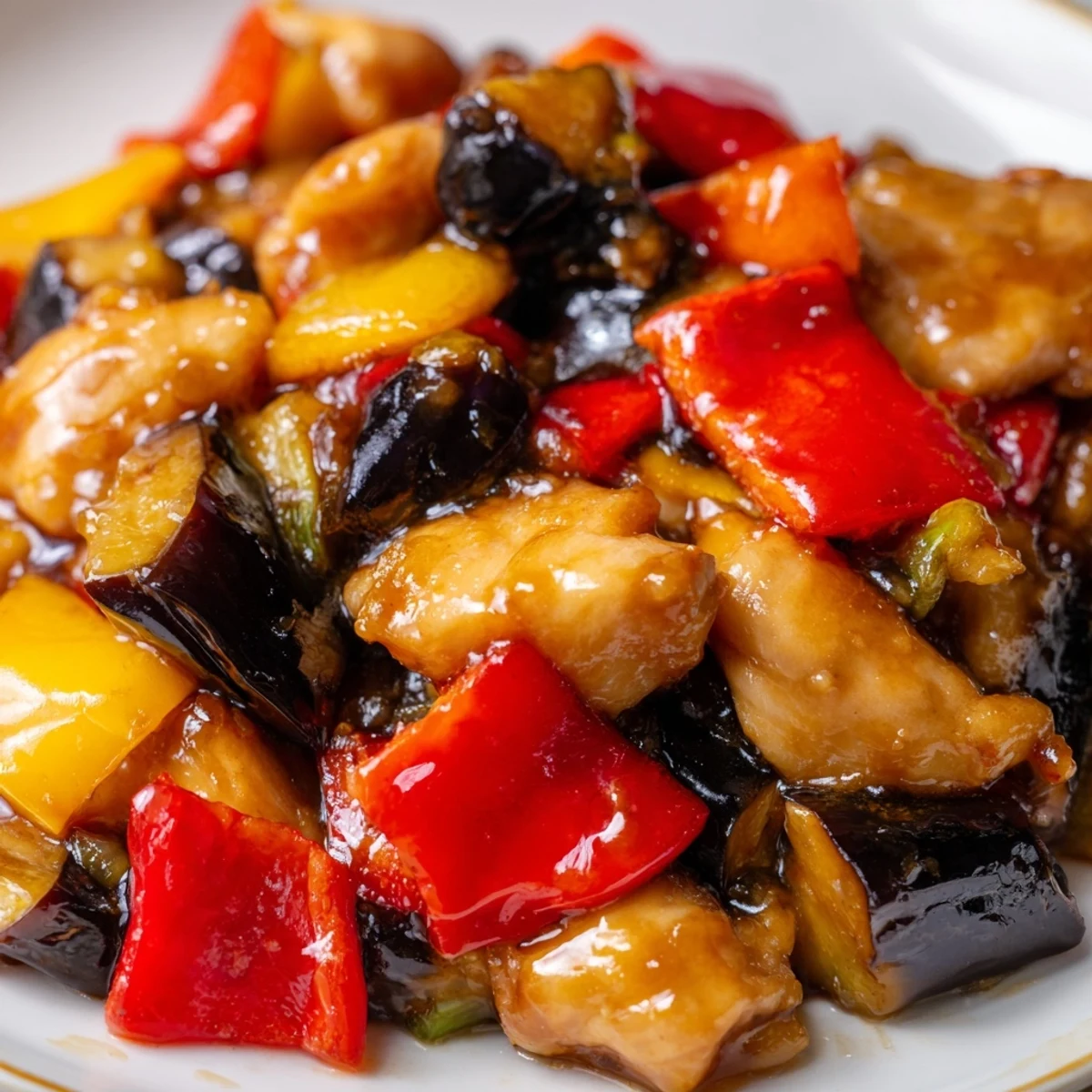
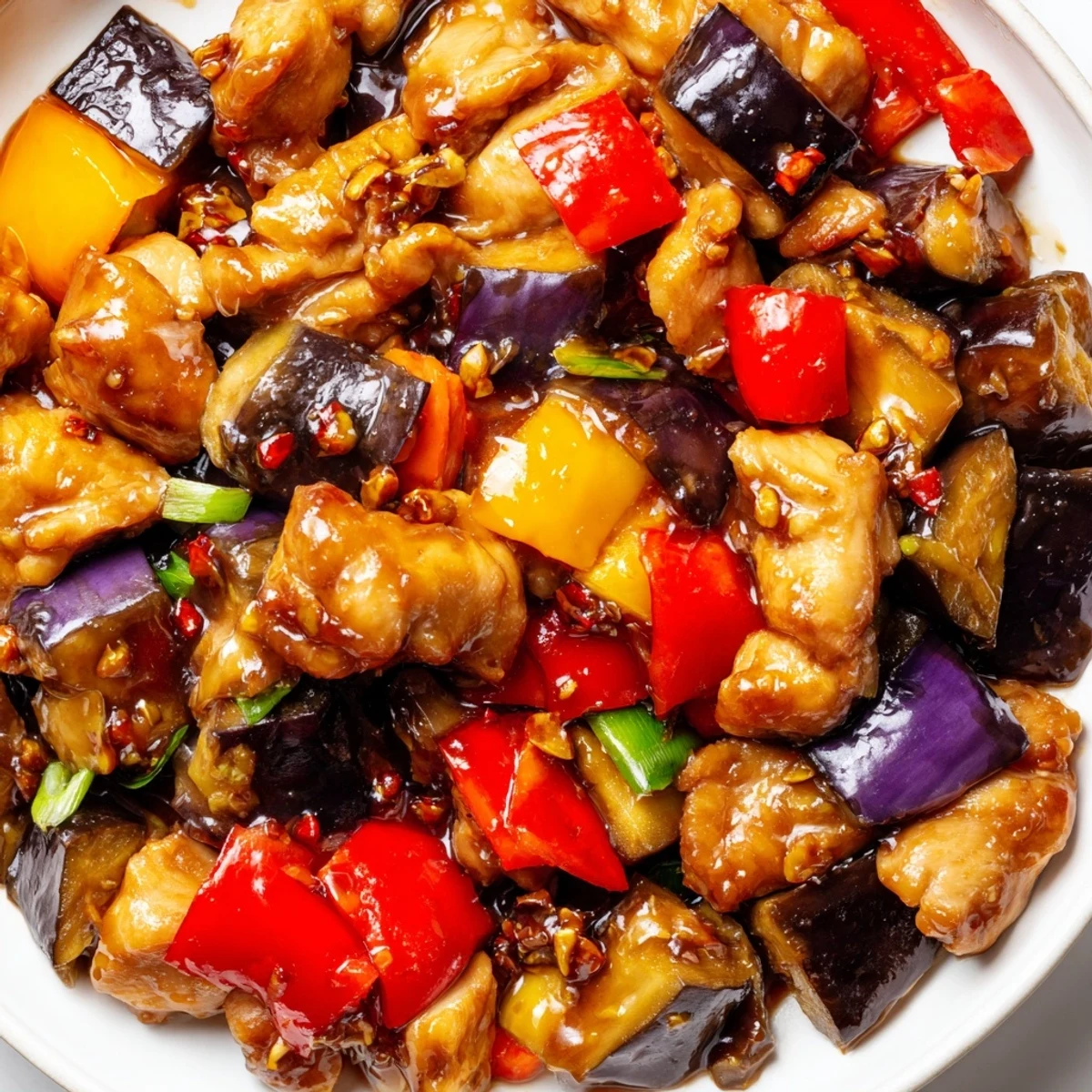
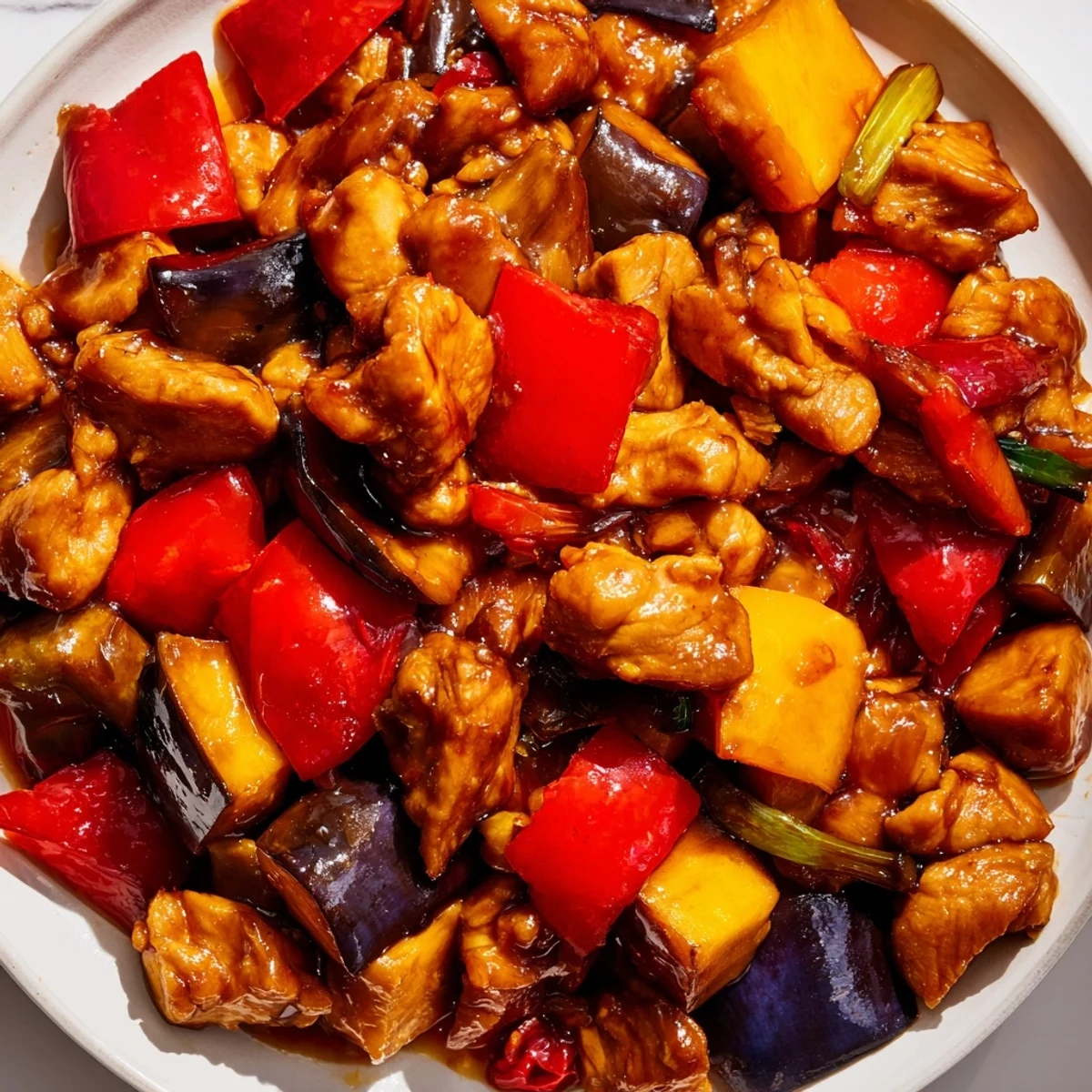
 This Chinese-inspired stir-fry combines tender marinated chicken with silky eggplant and crisp bell peppers, all coated in a glossy black vinegar sauce. The tangy, slightly sweet glaze clings beautifully to each ingredient, creating layers of flavor in every bite.
Start by marinating chicken thighs in soy sauce and Shaoxing wine for maximum tenderness. While the chicken rests, whisk together the aromatic sauce featuring Chinese black vinegar—a deeply flavorful ingredient that adds a complex tangy-sweet profile unlike any other vinegar.
The technique involves cooking the eggplant first until golden and tender, then stir-frying the chicken until browned. Fresh garlic, ginger, and scallions build the aromatic base before the bell peppers add crunch and color. Everything returns to the wok for a final toss in the thickening sauce.
The result is restaurant-quality stir-fry with perfectly balanced flavors: savory from soy sauce, tangy from black vinegar, and subtly sweet. Serve immediately over fluffy jasmine rice to soak up every drop of the luscious sauce.
Last Tuesday my apartment smelled like a proper Chinese kitchen, the kind where steam clouds your glasses and the wok hisses like it's telling secrets. My neighbor actually knocked to ask what I was cooking, and I ended up sending her home with a small bowl. That's the thing about black vinegar—once that tangy, complex scent hits the air, people start appearing like magic.
My friend Mei taught me the secret to restaurant-quality eggplant at home, and it changed everything. She said most people rush it, crowding the pan until everything steams instead of fries. Now I cook my eggplant first, letting it turn golden and creamy, and the texture difference is honestly night and day.
Ingredients
- 500 g boneless chicken thighs: Thighs stay juicy and tender, unlike breast meat that can dry out in the high heat of stir-frying
- 1 medium eggplant: Look for one that feels heavy for its size with smooth, shiny skin—no soft spots or wrinkling
- 1 red and 1 yellow bell pepper: Using both colors makes the dish gorgeous, and they bring slightly different sweetness levels
- 3 cloves garlic and 2 cm ginger: Fresh is non-negotiable here—jarred garlic has a weird aftertaste when cooked this quickly
- 2 scallions: Keep white and green parts separated—they go in at different times for layered flavor
- 3 tbsp Chinese black vinegar: This is the star, with its deep, complex acidity—don't sub with regular vinegar
- 1½ tbsp light soy sauce: Light soy adds saltiness without darkening the dish too much
- 1 tbsp sugar: Just enough to balance the vinegar's sharp edge and bring everything together
- 2 tsp cornstarch in the sauce: This creates that gorgeous glossy coating that clings to every piece
- 3 tbsp vegetable oil: Neutral oil lets the other flavors shine without competing
Instructions
- Marinate the chicken:
- Combine chicken with soy sauce, Shaoxing wine, cornstarch, and pepper in a bowl, then let it sit for 15 minutes while you prep everything else.
- Mix your sauce:
- Whisk together black vinegar, soy sauce, sugar, cornstarch, water, and sesame oil until smooth—no lumps allowed.
- Pre-cook the eggplant:
- Heat half the oil in a wok over medium-high heat, add eggplant cubes, and stir-fry for 5–7 minutes until golden and tender.
- Sear the chicken:
- Add remaining oil to the hot wok, then add marinated chicken and cook for 4–5 minutes until nicely browned.
- Build the aromatics:
- Toss in garlic, ginger, and white scallion parts, stirring constantly for just 1 minute until fragrant.
- Add the peppers:
- Throw in bell peppers and cook for 2–3 minutes—you want them tender-crisp, not soft.
- Bring it together:
- Return eggplant to the wok, pour in the sauce, and stir-fry for 2–3 minutes until everything's coated and glossy.
- Finish and serve:
- Sprinkle with green scallions and serve immediately while the sauce is still thick and clingy.
 Save to Pinterest
 This recipe became my go-to for stressed weeknights when I want something that feels special but doesn't require me to be mentally present for three hours. There's something meditative about the rhythm of stir-frying, the way ingredients hit hot oil and transform almost before your eyes.
Making It Vegetarian
Firm tofu works beautifully here—just press it first to remove excess water, cut into cubes, and treat it exactly like the chicken in the recipe. The sauce is rich enough that you won't miss the meat at all.
Rice Pairings
Jasmine rice is my default because its floral perfume plays nicely with the black vinegar, but brown rice adds nutty depth and holds up well to the bold sauce. Whatever you choose, start it before you begin prep so it's ready to scoop that sauce over.
Timing Your Stir-Fry
The biggest mistake I see is people adding everything at once and ending up with mushy vegetables. Each ingredient has its own timeline—eggplant needs time, peppers need barely any time, and the sauce needs those final few minutes to thicken properly.
- Prep all ingredients before turning on the stove
- Keep your heat high but stay in control
- Have your serving bowls ready before you start cooking
 Save to Pinterest
 Gather some friends, pour some wine, and let this dish be the centerpiece of a casual dinner. That's what stir-fry is really all about anyway.
Frequently Asked Questions
- → What does black vinegar taste like?
-
Chinese black vinegar has a deep, complex flavor profile that's mildly sweet with a tangy, slightly malty finish. Unlike sharp white vinegar or light rice vinegar, it adds richness and depth to stir-fries. If unavailable, balsamic vinegar makes a decent substitute though the flavor will be somewhat different.
- → Can I make this dish ahead of time?
-
The sauce and marinade can be prepared up to a day in advance and stored separately in the refrigerator. However, for best results, stir-fry the dish just before serving. The vegetables maintain their texture better when freshly cooked, and the sauce coating is at its most glossy right off the heat.
- → How do I prevent eggplant from absorbing too much oil?
-
Cutting the eggplant into uniform cubes and stir-frying it first over medium-high heat helps develop a golden exterior that reduces oil absorption. Don't overcrowd the wok—cook in batches if needed. The eggplant should become tender and slightly caramelized, not mushy or greasy.
- → Can I use chicken breast instead of thighs?
-
Boneless chicken breasts will work but may be less tender and juicy than thighs. If using breast meat, reduce cooking time slightly to prevent drying out, and consider adding a teaspoon of oil to the marinade. Chicken thighs remain the preferred choice for their superior flavor and texture in stir-fries.
- → What sides pair well with this dish?
-
Steamed jasmine rice is the classic accompaniment, soaking up the flavorful sauce. For a lighter option, try cauliflower rice or serve over steamed bok choy. A simple cucumber salad with rice vinegar dressing provides a refreshing contrast to the rich, tangy flavors of the main dish.
- → Is this dish spicy?
-
This version is not spicy—it focuses on tangy and savory flavors rather than heat. If you enjoy some spice, add sliced fresh chili peppers or a teaspoon of chili flakes along with the garlic and ginger. Sriracha or chili garlic sauce can also be stirred into the sauce mixture for extra kick.