
 Save to Pinterest
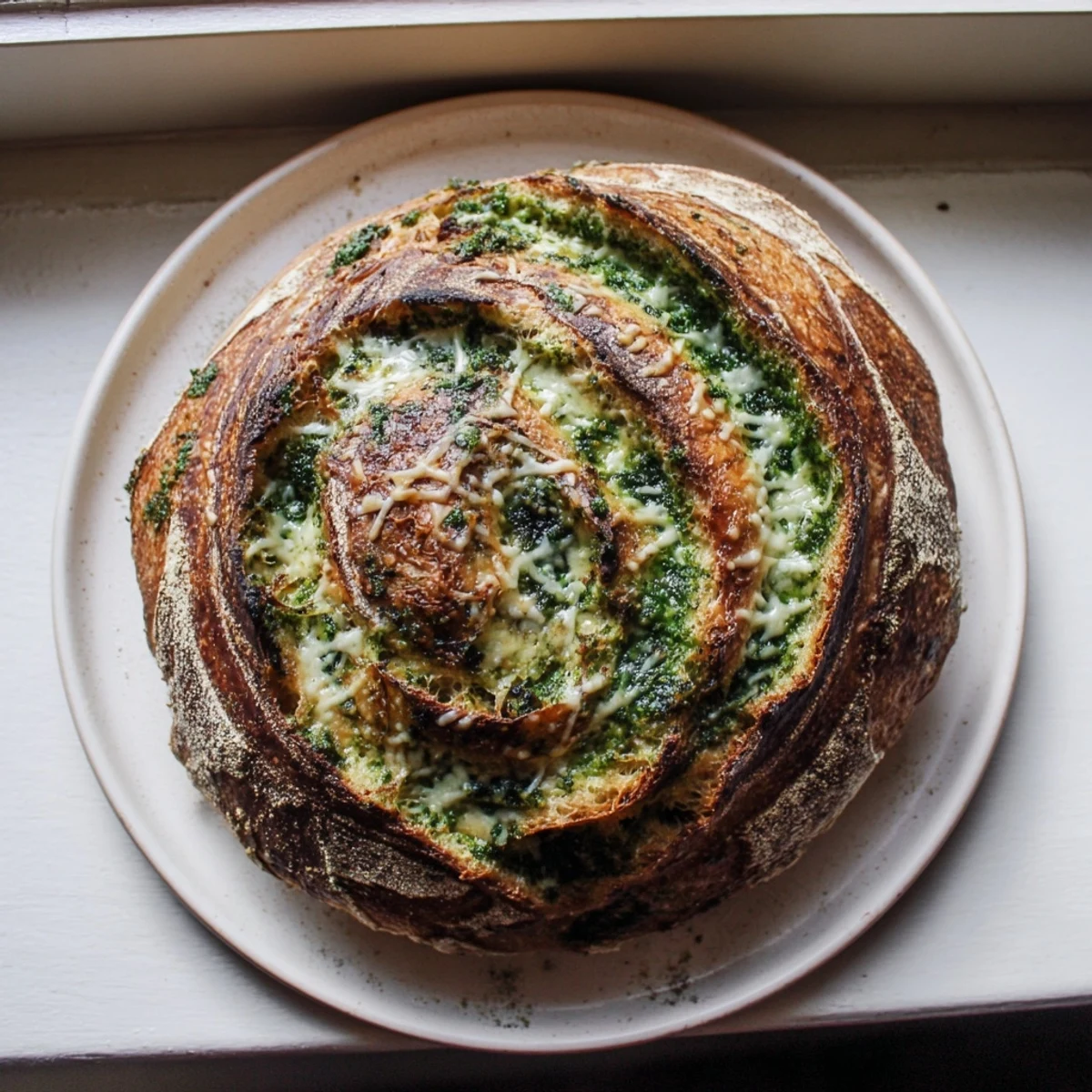
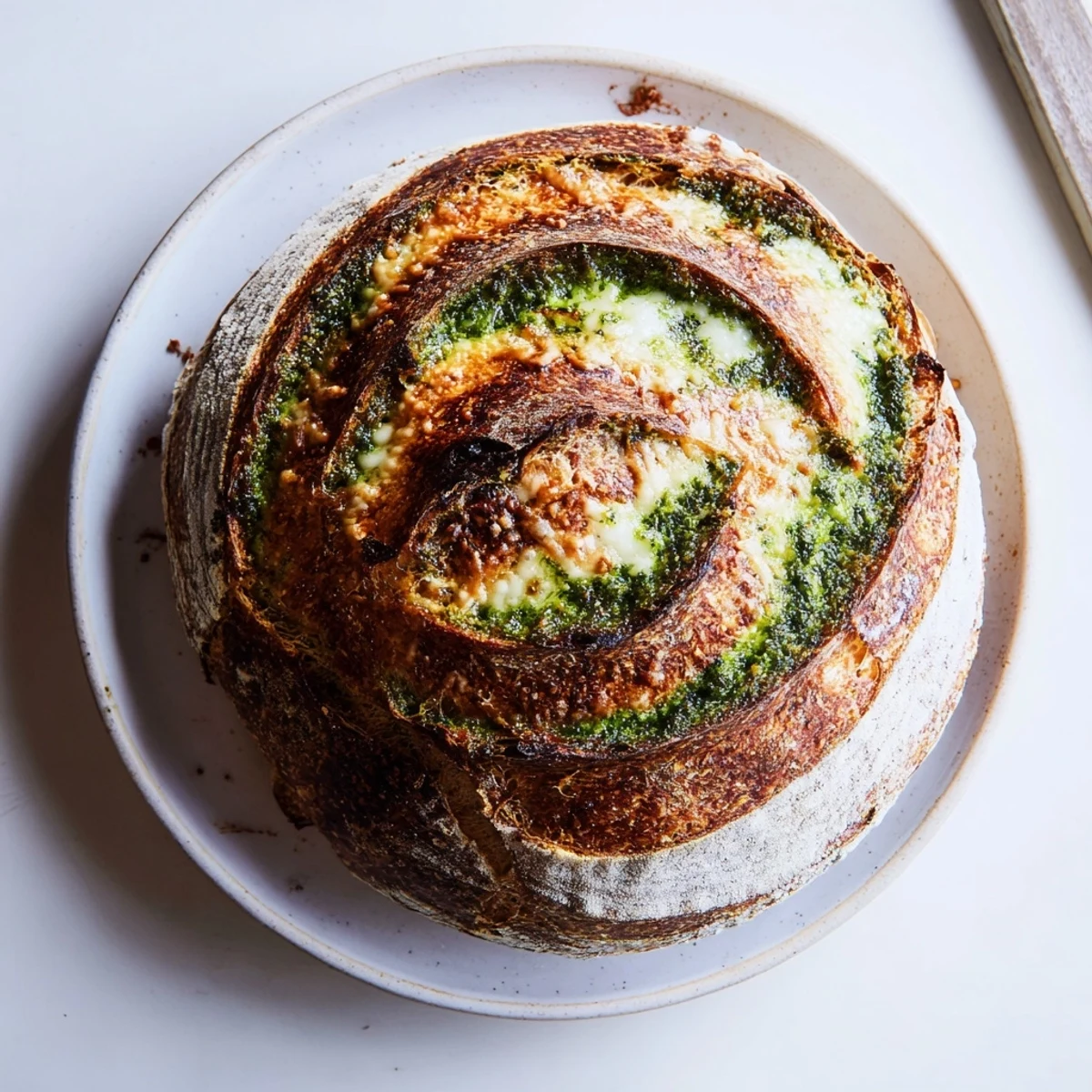
 This artisan loaf combines the tangy complexity of naturally leavened sourdough with aromatic basil pesto swirled throughout the crumb. The exterior develops a golden Parmesan crust while the interior remains tender and open. Ideal alongside pasta dishes, for gourmet sandwiches, or simply torn and shared with olive oil.
The long fermentation process (5-8 hours) develops deep flavor and chewy texture, while the Dutch oven baking method creates a professional bakery-style crust. You can customize the filling with sun-dried tomato or walnut pesto variations.
The first time I made pesto bread, my entire apartment smelled like an Italian grandmother's kitchen. I'd been experimenting with adding mix-ins to my sourdough and nothing had quite clicked yet. Then one afternoon, staring at a jar of homemade pesto in my fridge, I wondered what would happen if I swirled it right into the dough. The result was so stunning that my roommate asked if I'd secretly become a professional baker overnight.
I made this loaf for a friend's birthday dinner last spring. She's been my sourdough testing partner for years, trying every experimental flavor I dream up. When she bit into a slice of the pesto version, she literally stopped mid-sentence and closed her eyes. Now she requests it specifically instead of asking what I'm planning to bake.
Ingredients
- Bread flour: The higher protein content gives this loaf structure to hold all that gorgeous filling
- Lukewarm water: Not too hot or you'll wake up your starter too aggressively
- Active sourdough starter: Use it at its peak bubbly stage for the best rise and flavor
- Fine sea salt: Coarse salt won't dissolve properly into the dough
- Basil pesto: Homemade or store-bought both work wonderfully
- Freshly grated Parmesan: Pre-grated cheese doesn't melt quite the same way
- Olive oil: Creates that beautiful golden finish on the crust
Instructions
- Mix and rest your dough:
- Combine flour and water until just combined, then cover and let it hydrate for 30 to 45 minutes
- Incorporate starter and salt:
- Add your starter and salt, mixing thoroughly until everything is evenly distributed
- Build strength through folds:
- Perform stretch-and-folds every 30 minutes for 2 hours, keeping the dough covered between sessions
- Let it rest again:
- After your final fold, let the dough relax for 1 hour at room temperature
- Prepare for filling:
- Turn the dough onto a lightly floured surface and gently stretch it into a rectangle
- Add the flavor:
- Spread pesto evenly over the dough, leaving a 2 cm border, then sprinkle with 40 g of Parmesan
- Shape your loaf:
- Roll from the short end into a log, then shape into a round or batard
- Final rise:
- Place in a floured banneton seam side up, cover, and let rise for 2 to 3 hours or refrigerate overnight
- Preheat strategically:
- Heat your oven to 230°C (450°F) with your Dutch oven inside
- Add the finishing touches:
- Turn dough onto parchment, brush with oil, sprinkle with remaining Parmesan, and score
- Bake with steam:
- Cover and bake for 20 minutes, then uncover for another 18 to 20 minutes until golden
- Patience pays off:
- Cool completely on a wire rack before slicing or the crumb will be gummy
 Save to Pinterest
 This bread has become my go-to for housewarming gifts. Something about cutting into that green marble pattern makes people feel like they're receiving something truly special. Last month I brought one to a potluck and it was gone before anyone even touched the main dishes.
Timing Your Bake
I've learned the hard way that starting this bread first thing in the morning means eating dinner bread. The bulk fermentation plus final proofing needs serious hours. My best bakes happen when I mix the night before and let the cold overnight slow-proof develop incredible flavor while I sleep.
Shaping Confidence
The first few times I tried to roll dough with pesto inside, I made such a mess. Pesto squeezed out the sides, my hands were green, and the final loaf looked like it had been through a battle. Now I use less filling than seems necessary and trust that the spiral will still look impressive. A bench scraper helps keep everything contained while rolling.
Flavor Variations
Sun-dried tomato pesto creates this gorgeous red swirl that looks incredible on a bread board. I've also made a version with walnut pesto that added this subtle earthy crunch throughout. Sometimes I'll mix chopped fresh herbs into the Parmesan topping for extra aromatics.
- Sundried tomato pesto pairs beautifully with some shredded mozzarella inside
- A drizzle of balsamic reduction over the baked loaf makes it show-stopping
- This bread freezes beautifully if you wrap it tightly before freezing
 Save to Pinterest
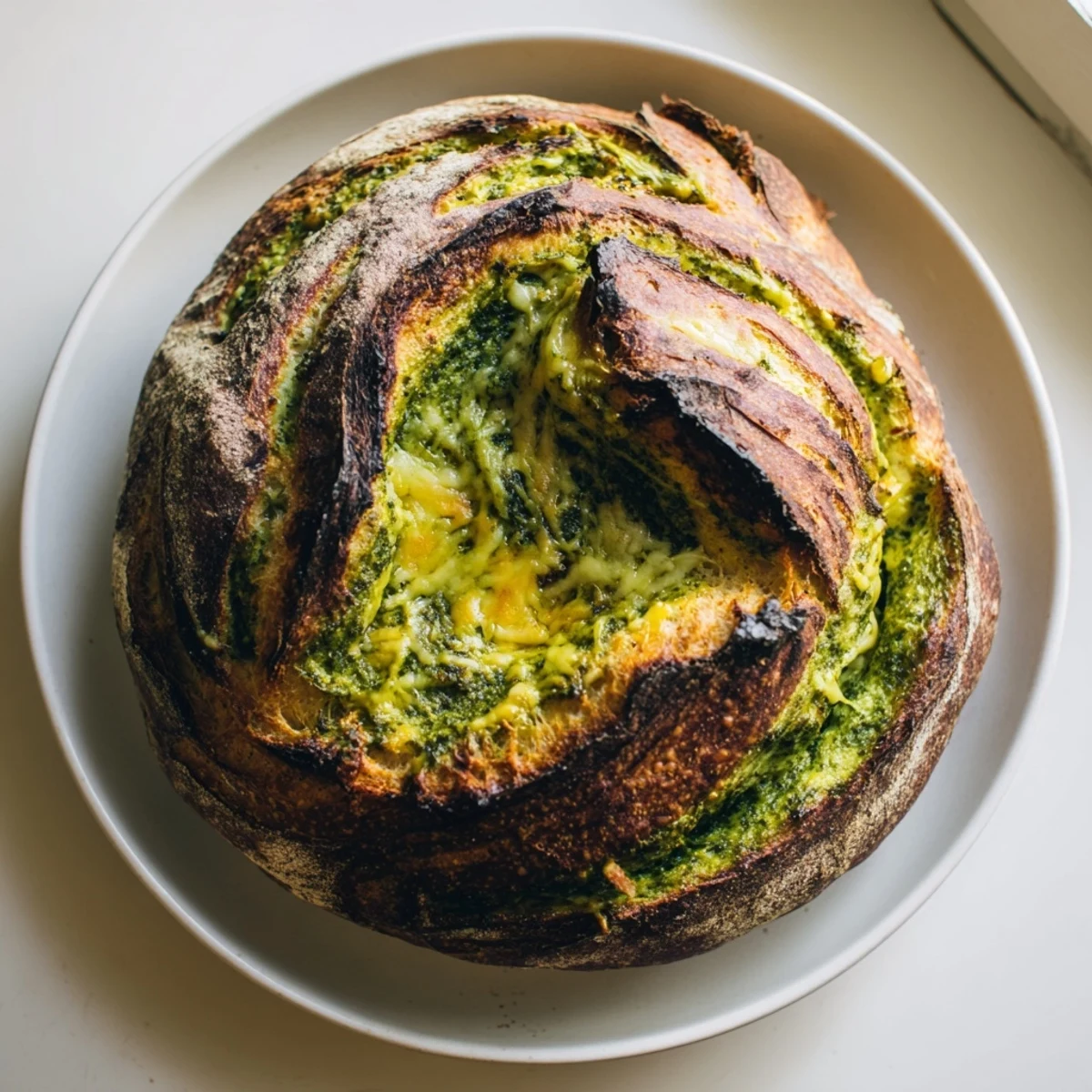
 There's something deeply satisfying about pulling a freshly baked loaf from the oven. The smell, the sound of the crust crackling, the way steam escapes when you cut that first slice. This pesto sourdough has brought more joy to my kitchen than almost any other recipe I've developed.
Frequently Asked Questions
- → Can I use active dry yeast instead of sourdough starter?
-
Yes, substitute 7g instant yeast for the starter. Reduce initial water by 50ml and skip the autolyse. Rise time will be approximately 2-3 hours total rather than overnight.
- → How should I store this loaf?
-
Wrap tightly in plastic and store at room temperature for up to 3 days. For longer storage, slice and freeze in freezer bags for up to 3 months. Refresh frozen slices in a 200°C oven for 5 minutes.
- → Can I make this without a Dutch oven?
-
Bake on a preheated baking stone or heavy baking sheet. Create steam by placing a metal tray with ice cubes on the bottom rack while preheating. The crust may be slightly thinner but still delicious.
- → What's the best way to incorporate the pesto?
-
Stretch the dough gently without tearing. Spread pesto evenly, leaving the border clean. Roll tightly from the short end to create distinct swirl layers. Seal firmly to prevent leakage during baking.
- → Can I prepare the dough ahead of time?
-
Absolutely. After shaping and placing in the banneton, refrigerate overnight (8-12 hours). The cold fermentation enhances flavor development. Bring to room temperature for 1 hour before baking.