
 Save to Pinterest
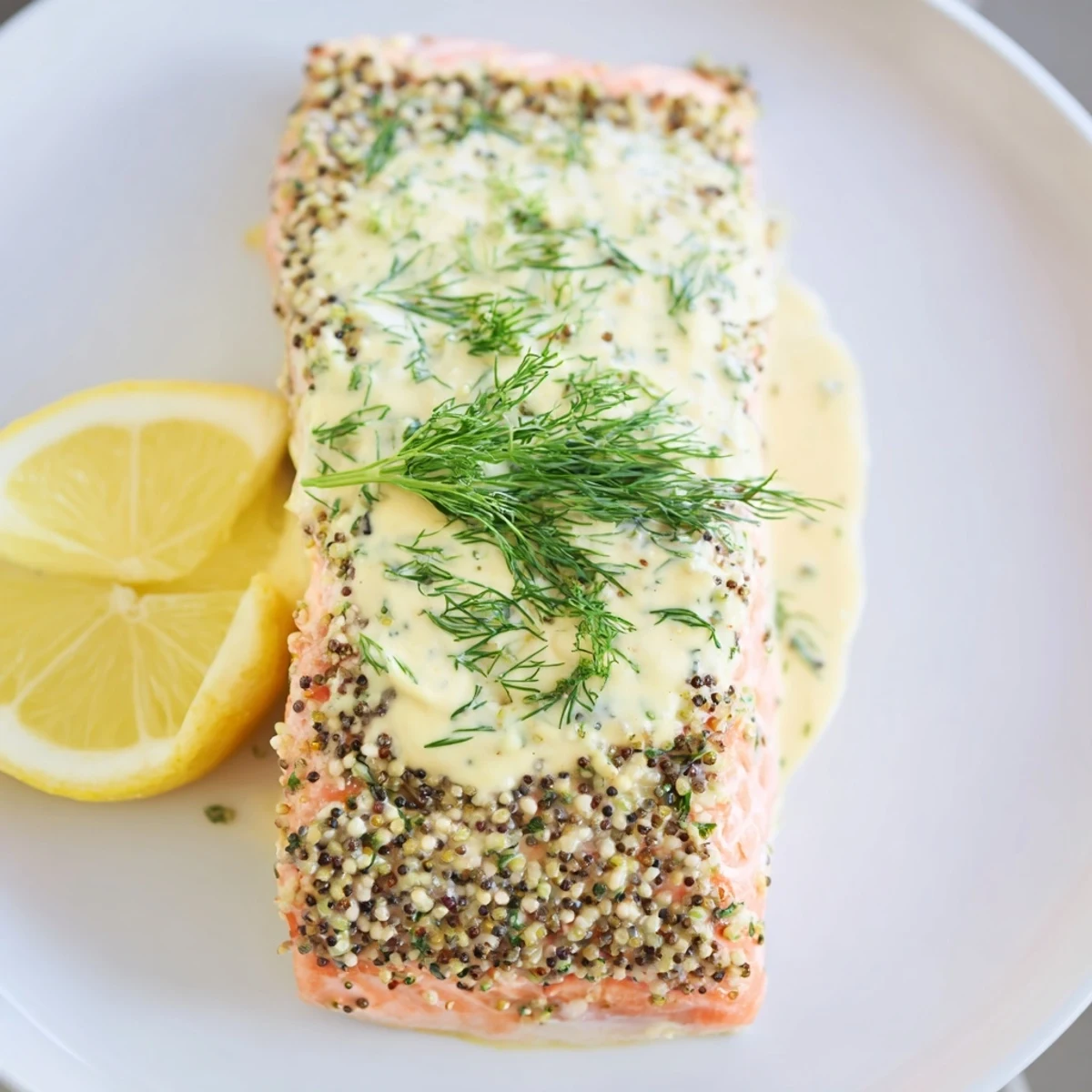
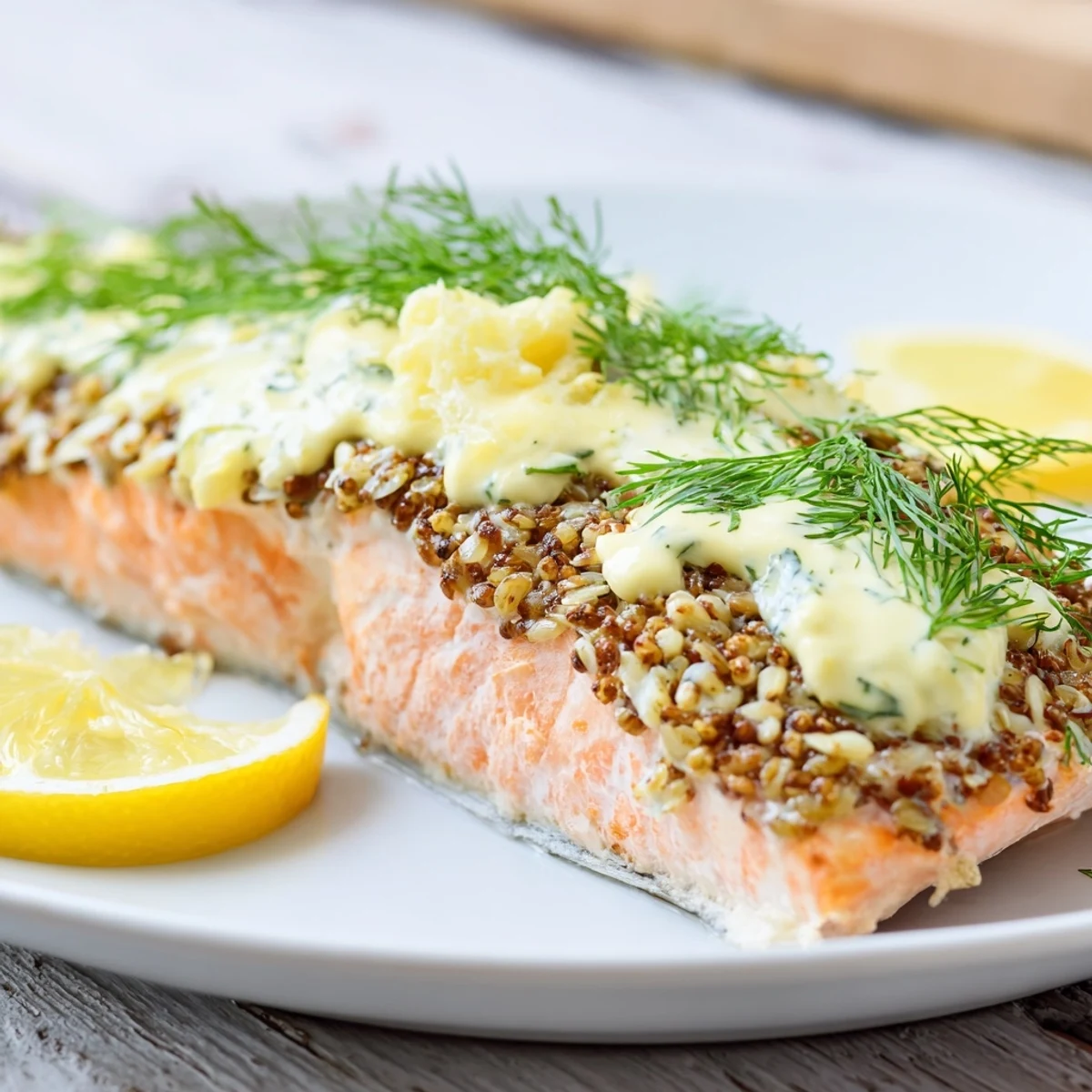
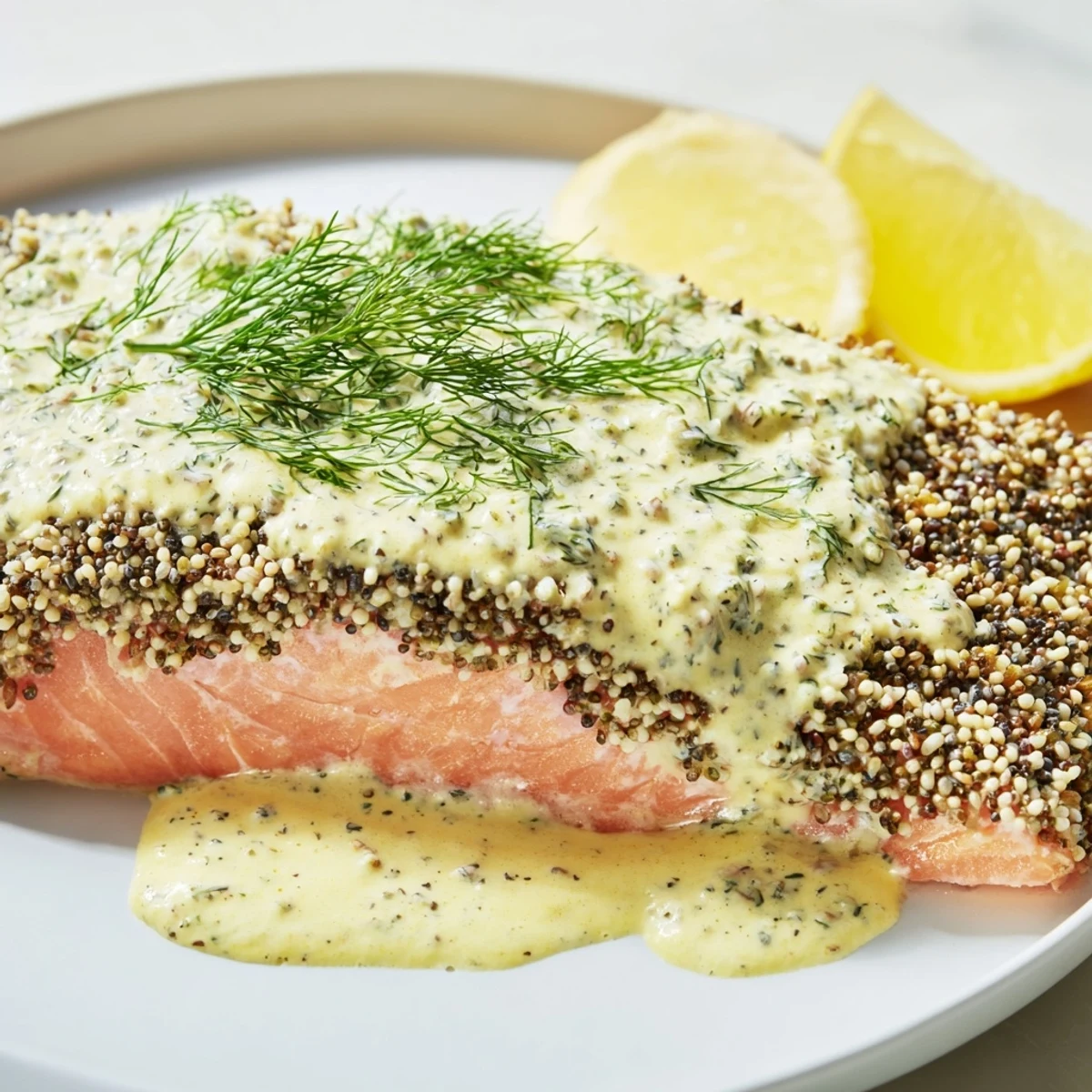
 This dish features succulent salmon fillets oven-cooked to tender perfection and topped with a luscious dill and mustard sauce combining Dijon and whole grain mustards, mayonnaise, fresh dill, lemon juice, honey, and garlic. It’s easy to prepare and balanced in flavor, providing a vibrant complement to the fish. Ideal for a nutritious meal, serve with lemon wedges and your favorite sides such as roasted potatoes or steamed vegetables.
There's something about salmon that makes even a weeknight dinner feel like an occasion. I discovered this particular combination on a quiet Tuesday when I was avoiding my usual routine—I'd just picked up some beautiful wild salmon from the market and had fresh dill leftover from making a salad. The idea of pairing sharp mustard with creamy sauce came to me almost by accident, and when I pulled it from the oven, the kitchen smelled absolutely incredible.
I made this for my sister on a winter evening when she was feeling overwhelmed with work, and I watched her shoulders relax at the first bite. She asked for the recipe that night, and now she texts me photos of her versions with different vegetables on the side. That's when I knew it was a keeper—not because it was complicated, but because it somehow felt like comfort and sophistication at once.
Ingredients
- Salmon fillets (4, about 6 oz each): Choose fillets that feel firm and smell briny, never fishy. The skin acts as a natural shield during baking, keeping the flesh tender.
- Olive oil (1 tablespoon): A good quality oil makes all the difference in how the salmon cooks—it creates a gentle heat barrier.
- Salt and black pepper: Don't skip this step; it's your foundation for every layer of flavor to come.
- Dijon mustard (3 tablespoons): The sharper cousin in the sauce family, it cuts through the richness beautifully.
- Whole grain mustard (2 tablespoons): Those little seeds add texture and a subtle sweetness that Dijon alone can't provide.
- Mayonnaise (3 tablespoons): This is what transforms the mustards from tangy into silky; it's the peacemaker of the sauce.
- Fresh dill (2 tablespoons, plus extra for garnish): Dill and salmon were made for each other—use fresh whenever you can because dried dill tastes like old celery by comparison.
- Fresh lemon juice (1 tablespoon): The brightness that makes everything else pop; squeeze it fresh if your lemon feels heavy.
- Honey (1 teaspoon): Just enough to round out the sharp edges without making anything sweet.
- Garlic clove (1, minced): A whisper of garlic, not a shout—mince it small so it disperses evenly through the sauce.
- Lemon wedges for serving: These aren't just decoration; they're your last-minute brightener for anyone who wants extra tang.
Instructions
- Get Your Space Ready:
- Preheat your oven to 200°C (400°F) and line your baking sheet with parchment paper or a light spray of nonstick. A hot oven means the salmon's exterior sets while the inside stays tender.
- Prepare the Salmon:
- Pat your fillets completely dry with paper towels—any moisture is the enemy of a good sear. Lay them skin-side down, brush lightly with olive oil, then season generously with salt and pepper on both sides.
- Into the Oven:
- Bake for 12 to 15 minutes, depending on thickness. You'll know it's done when the flesh is opaque all the way through and flakes easily at the thickest part—overcooked salmon is dry salmon.
- Make the Sauce While Everything Cooks:
- In a small bowl, whisk together both mustards, the mayonnaise, fresh dill, lemon juice, honey, and minced garlic until completely smooth. Taste it and adjust as you like—this is your moment to make it more or less sharp.
- The Final Assembly:
- Remove the salmon from the oven and let it rest for just a minute. Spoon the sauce generously over each fillet, garnish with extra dill, and serve with lemon wedges on the side.
 Save to Pinterest
 There was a moment when I made this for my mother-in-law, who'd always been politely skeptical of my cooking, and she asked if I'd made the sauce from scratch. When I said yes, she actually smiled—not a polite one, but a genuine smile. Small victories in the kitchen sometimes matter more than perfect technique.
Choosing Your Salmon
Wild salmon has more personality than farmed—the flesh is firmer and the flavor has a subtle earthiness. If wild is expensive on your shopping day, farmed is perfectly fine; just give it a gentle squeeze to make sure it feels resilient and not mushy. A good fishmonger will let you smell it too, which honestly tells you everything.
The Sauce Philosophy
This sauce works because it's balanced between sharp and smooth, tangy and creamy, simple and complex. I've experimented with swapping ingredients—Greek yogurt for mayo, fresh tarragon for dill—and each change shifts the personality slightly. The beauty is that once you understand the framework, you can play within it.
Sides and Serving
Roasted potatoes with rosemary or steamed asparagus are classic partners, but I've also served this with a simple green salad and crusty bread for soaking up extra sauce. A crisp Sauvignon Blanc is practically essential—the acidity in the wine echoes the lemon and mustard in the sauce.
- Roast your potatoes in the same oven while the salmon cooks to save time and dishes.
- If you're making this for guests, you can prepare the sauce up to 2 hours ahead and refrigerate it.
- Leftovers are delicious cold the next day, either plated as-is or tucked into a salad.
 Save to Pinterest
 This recipe lives in that sweet spot where it feels elegant enough for company but easy enough for a quiet meal alone. I keep making it because it never feels like a burden, and somehow it always feels special.
Frequently Asked Questions
- → What type of salmon works best for baking?
-
Fresh, skin-on or skinless salmon fillets about 6 oz each are ideal, ensuring even cooking and moist texture.
- → How can I tell the salmon is perfectly cooked?
-
The salmon should be opaque in the center and flake easily with a fork, usually after 12-15 minutes baking at 200°C (400°F).
- → Can I substitute mayo in the sauce?
-
Yes, Greek yogurt can be used for a lighter, tangier sauce while maintaining creaminess.
- → Is fresh dill necessary for the sauce?
-
Fresh dill offers the best flavor, but dried dill can be used if fresh is unavailable; use about 1 tablespoon dried.
- → What sides complement this salmon dish?
-
Steamed vegetables, roasted potatoes, or a crisp salad pair well, enhancing the dish’s fresh and savory notes.
- → Can I prepare the sauce ahead of time?
-
Yes, the creamy dill and mustard sauce can be made in advance and refrigerated for up to a day to let flavors meld.