
 Save to Pinterest
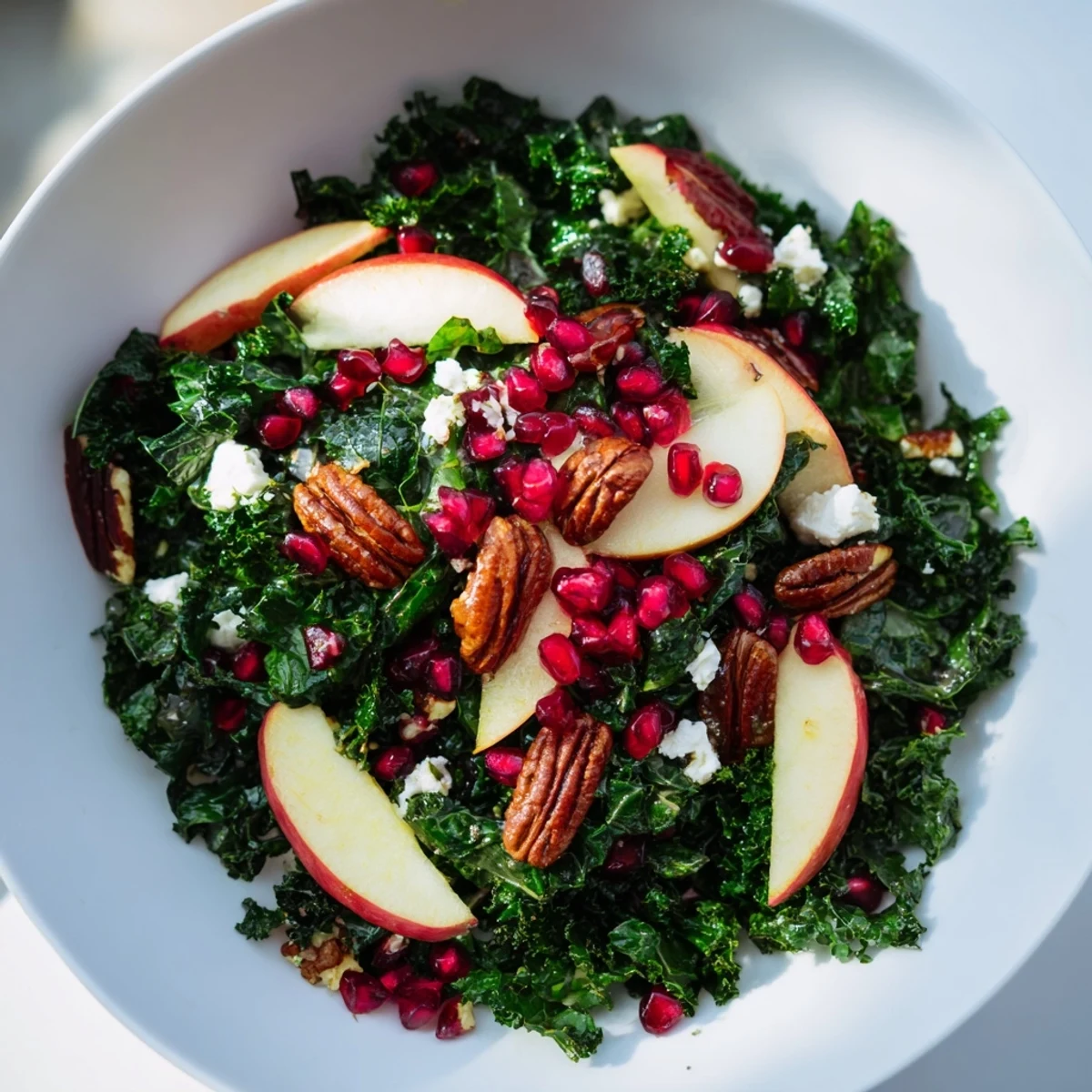
 This winter dish highlights curly kale massaged to perfection, enriched with sweet pomegranate seeds and toasted pecans for texture. Thin apple slices add a touch of crispness, balanced by a citrus-based dressing with olive oil, lemon, and orange juice. Optional feta cheese adds creaminess while honey and Dijon mustard provide subtle sweetness and tang. Quick to prepare, it's a refreshing choice for any seasonal gathering or light lunch.
Last December, I was standing in my kitchen on a gray afternoon when my neighbor stopped by with a bag of pomegranates from her tree. I'd been meaning to make something festive but filling for a potluck that weekend, and those deep red seeds seemed like exactly the sign I needed. That's when this salad came together—it's become my go-to whenever I want something that tastes more special than it actually is to make.
I remember serving this at a holiday dinner where my aunt asked for the recipe before dessert was even cleared. She'd been skeptical about kale for years, but something about the sweetness of the pomegranate and the toasted pecans made her actually enjoy it. That's when I realized this salad has a quiet magic—it converts people who think they don't like salads.
Ingredients
- Curly kale, 1 large bunch: The hearty texture holds up to dressing without getting soggy, and the ruffles catch every bit of that citrus coating.
- Pomegranate seeds, 1 cup: Yes, extracting them takes a few extra minutes, but their tartness balances the whole bowl and their jewel-like appearance makes it worth the effort.
- Pecan halves, 3/4 cup lightly toasted: Toasting them brings out a deeper richness that raw pecans just can't match.
- Apple, 1 medium thinly sliced: Granny Smith or Pink Lady work best because their tartness keeps the salad from feeling too sweet.
- Feta cheese, 1/3 cup crumbled: The salt and creaminess anchor everything, though you can absolutely skip it for vegan versions.
- Extra-virgin olive oil, 3 tablespoons: Don't cheap out here—the quality makes a noticeable difference in the dressing.
- Fresh lemon juice, 1 tablespoon: Bottled works in a pinch, but fresh citrus makes the dressing sing.
- Fresh orange juice, 1 tablespoon: This small amount adds subtle sweetness that makes the whole thing feel less like salad and more like a treat.
- Honey or maple syrup, 2 teaspoons: Either works, but maple syrup gives it a more earthy, autumn note.
- Dijon mustard, 1 teaspoon: This emulsifies the dressing so it actually coats the leaves instead of sliding to the bottom of the bowl.
- Salt and black pepper to taste: Start conservatively since the feta already brings saltiness.
Instructions
- Massage the kale until it transforms:
- Tear or chop your kale into bite-sized pieces and pile it into your largest bowl. Sprinkle it with a big pinch of salt and a drizzle of olive oil, then use your hands to really work the leaves, rubbing and tossing for about two minutes until they soften and turn a deeper green. You'll feel the leaves become more tender under your fingers.
- Whisk the dressing into balance:
- In a separate small bowl, pour your olive oil and squeeze in the fresh lemon and orange juices. Add the honey, mustard, salt, and pepper, then whisk until it emulsifies and turns slightly creamy. Taste it straight—it should be bright and a little mustardy without any one flavor overwhelming the others.
- Build your salad with intention:
- Scatter the pomegranate seeds over the massaged kale, then add your toasted pecans, apple slices, and crumbled feta if you're using it. Pour that dressing right over the top.
- Toss everything until every leaf glistens:
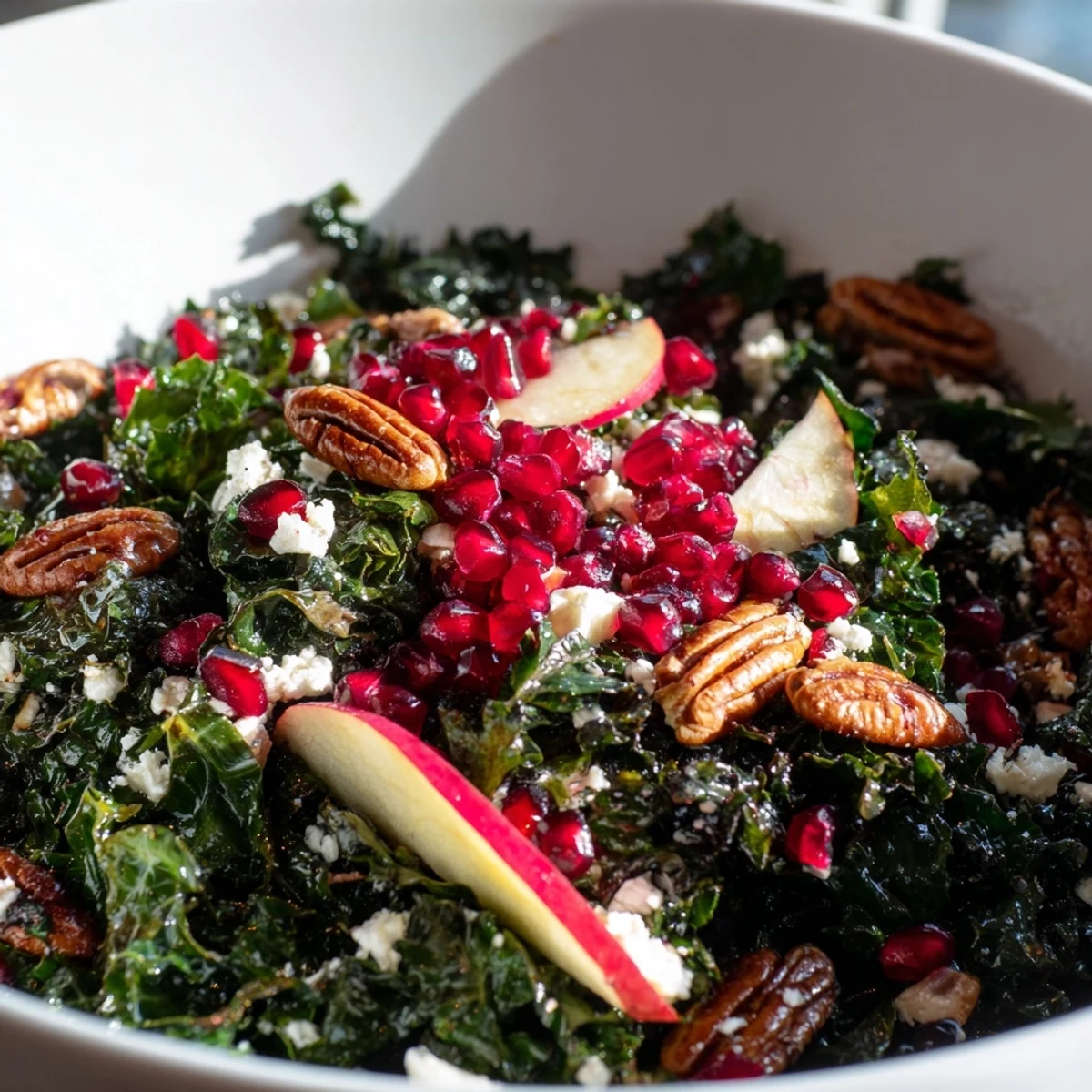
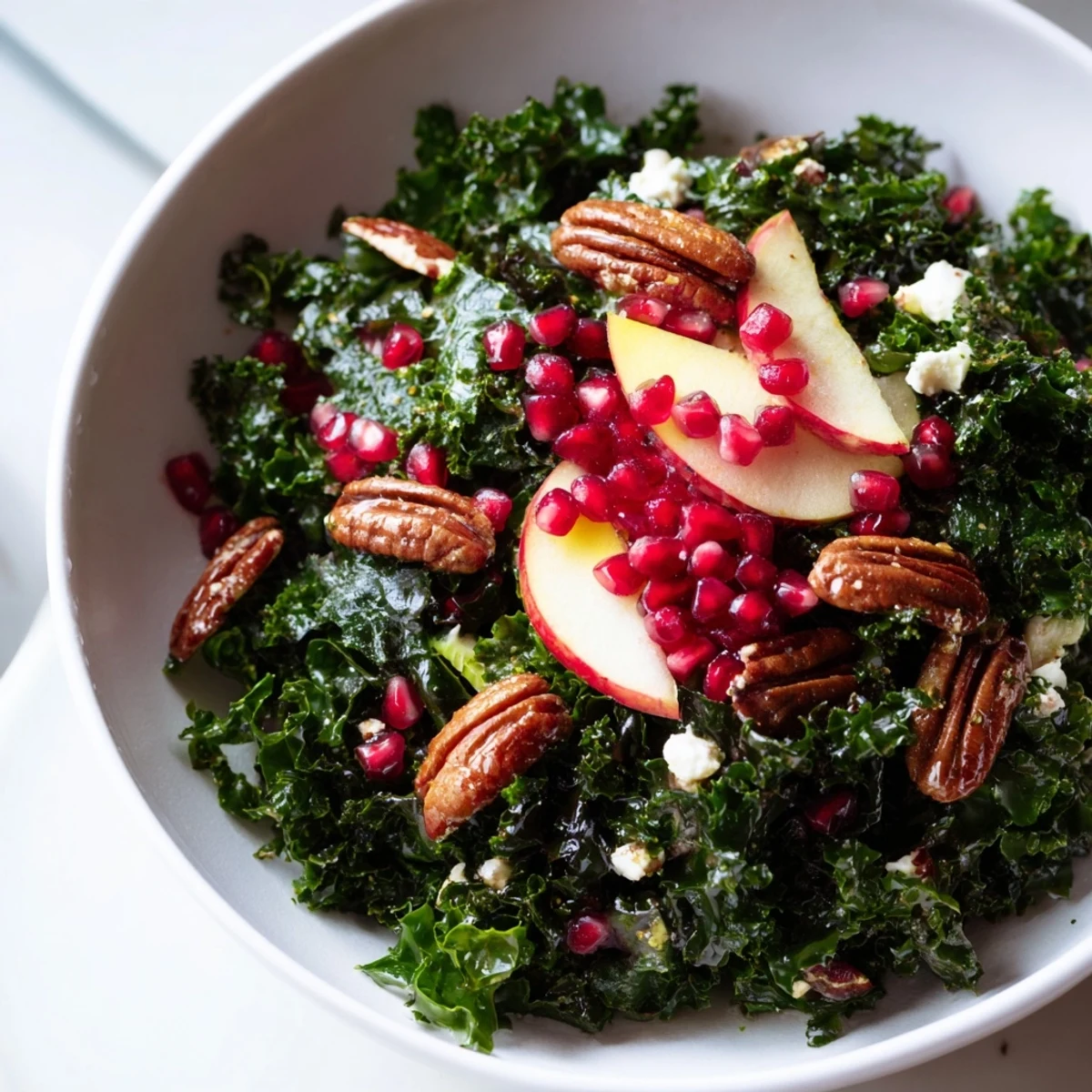
- Use your hands or tongs to toss the whole salad together until the dressing coats everything evenly. The kale should look glossy and jeweled with pomegranate.
- Taste and serve:
- Take a bite and adjust salt and pepper if needed. You can serve this right away while everything is crisp, or let it chill for up to an hour before your guests arrive.
 Save to Pinterest
 I made this for my kids one winter afternoon when they'd been glued to screens all morning. Watching them actually finish their salad without being asked felt like a small victory. There's something about the colors and the sweetness that made it feel less like eating their vegetables and more like a celebration.
Why Kale Stays Crisp Here
The massage step isn't just a cooking technique—it's the entire secret. By breaking down the cell structure of the kale with salt and oil before adding the dressing, you create leaves that can absorb flavor without becoming mushy. This is why you can make this salad a little ahead of time and it actually tastes better as the flavors meld, rather than worse as the leaves wilt.
The Importance of Toasted Pecans
Raw pecans are fine, but toasted ones transform the entire salad. Spend three minutes in a dry skillet over medium heat and you'll unlock a deeper, almost caramel-like warmth that plays beautifully against the bright pomegranate and citrus. If you're buying pre-toasted pecans from the store, that works just fine too—you're already ahead of the game.
Making It Your Own
This salad is a template more than a rigid recipe, and that's what makes it so useful. I've added shredded beets for earthiness, swapped in different nuts depending on the season, and experimented with variations of the dressing. The core combination of hearty greens, sweet fruit, crunchy nuts, and bright citrus dressing is what makes it work.
- Try shredded red cabbage or thinly sliced radishes for extra crunch and a peppery note.
- Roasted pumpkin seeds or sunflower seeds work beautifully if you're avoiding tree nuts.
- Goat cheese or crispy chickpeas add protein and work perfectly for vegan versions.
 Save to Pinterest
 This salad has become my answer when someone asks what to bring to dinner. It's nourishing without feeling like punishment, beautiful enough to be the star of the table, and simple enough that I can make it while catching up with whoever's standing in my kitchen.
Frequently Asked Questions
- → How do I soften kale for this salad?
-
Massage chopped kale with a pinch of salt and olive oil for 2–3 minutes until it becomes tender and dark green.
- → Can I use a different nut instead of pecans?
-
Yes, walnuts or almonds can be substituted for pecans to maintain crunch and flavor variety.
- → Is it possible to make this dish vegan?
-
Omit the feta cheese and use maple syrup instead of honey in the dressing to keep it vegan-friendly.
- → What dressing ingredients are used?
-
The dressing combines extra-virgin olive oil, fresh lemon and orange juice, honey or maple syrup, Dijon mustard, salt, and black pepper.
- → How long can the salad be stored before serving?
-
It can be chilled for up to one hour before serving to keep it fresh and flavorful.